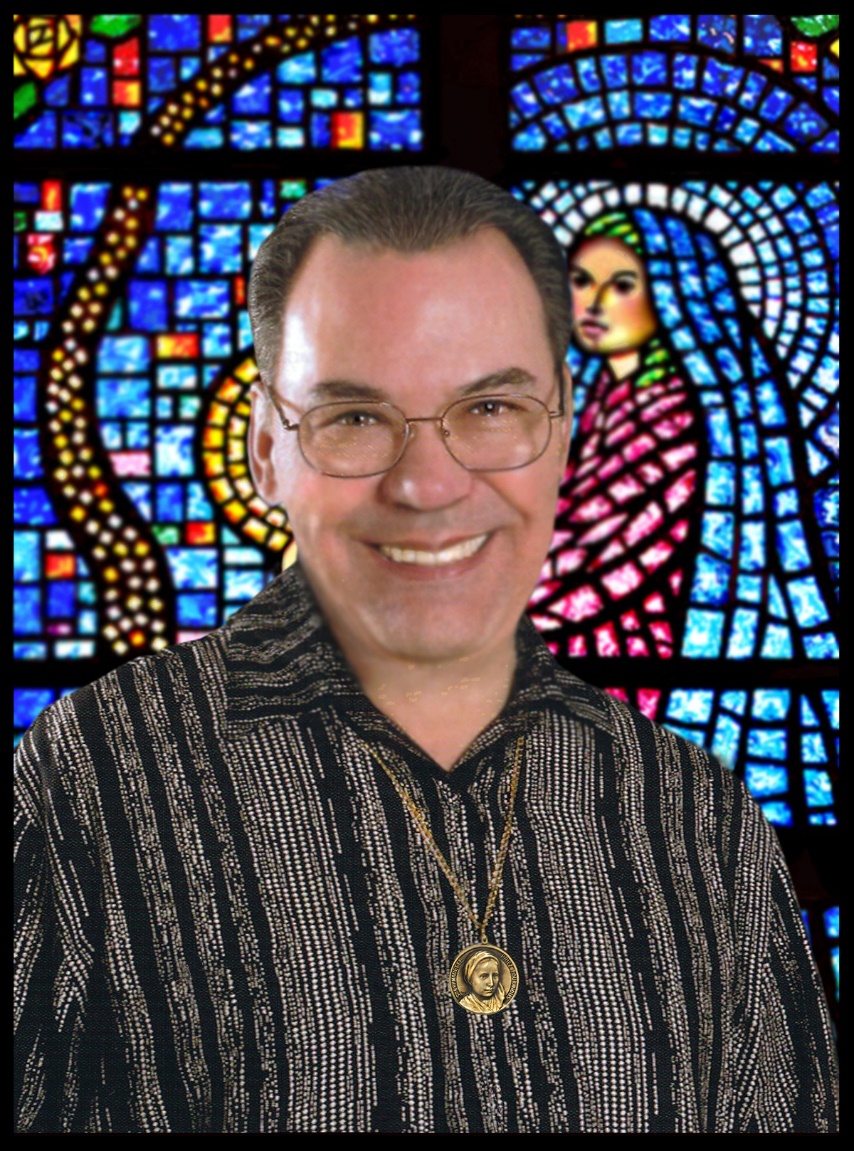
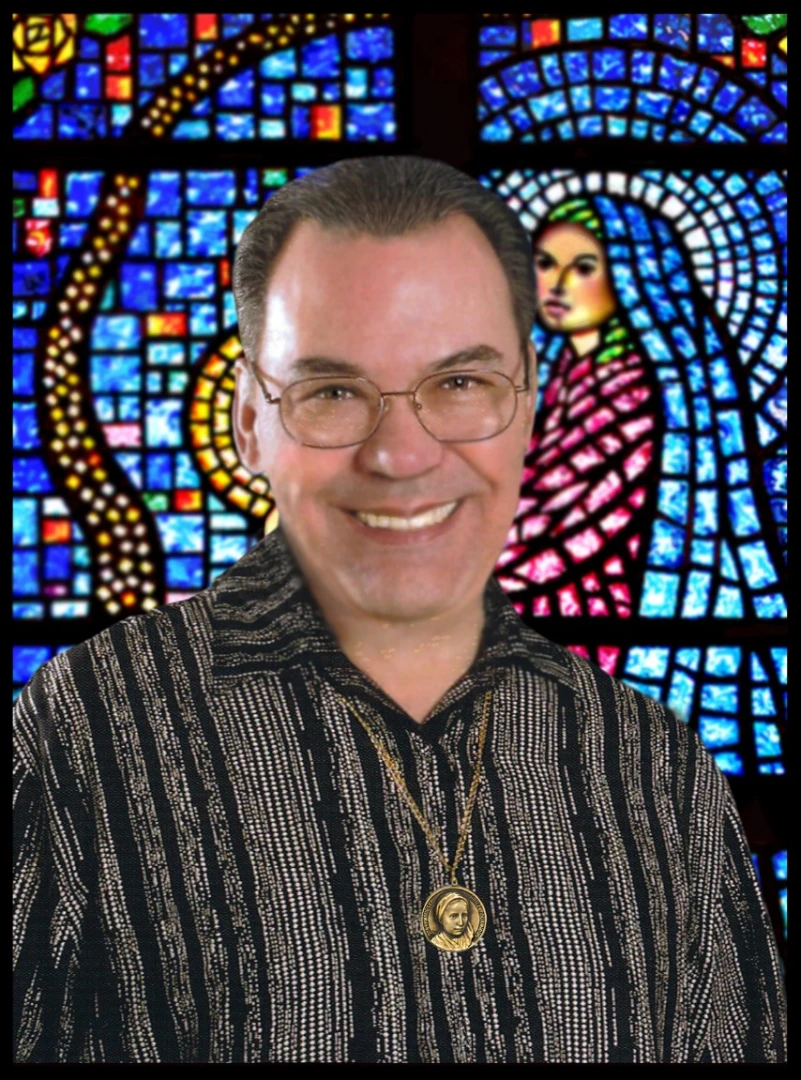
For more than half a century, Dan Paulos has built a life around sacred art, religious memory and the belief that simplicity can reveal what grandeur sometimes obscures. His Saint Bernadette Tetralogy gathers decades of research, pilgrimage, friendship and devotion into a deeply personal portrait of one of Catholicism’s most beloved saints.
Dan Paulos entered the world in Sioux City, Iowa, in 1949. He was one of eight children. He later said his family had little money, but the home felt warm.
World War II had only just ended. Many adults around him still carried the strain of those years. Even so, his Catholic school life felt different. Something else was growing there. He noticed music. He noticed nuns. He saw religious art in everyday places. He felt his own creative side wake up.
At St. Boniface Catholic Grade School, he ran into the work of Sister Mary Jean Dorcy, O. P. Her paper cuts were done in black and white. The pieces hung on bulletin boards and caught his eye.
He could not let it go.
Other students looked and then forgot. Paulos kept thinking about the maker. He wanted to meet her. He wanted to write to her.
Paulos standing before his Bernadette window at the Shrine of Saint Bernadette in Albuquerque
So, he asked the sisters for her address again and again. At first, they did not trust his plan. They wondered why she would reply to a boy.
He kept asking anyway.
In time, they gave him the information. He sent a letter. Sister Mary Jean replied.
In the mail, he found photos of new paper cuttings. The images were fresh, and they felt personal. That first letter exchange started a bond. It stayed alive until her death in 1988.
But more than friendship, it opened a path for him. She offered ideas. He made new silhouettes from those notes. Then he mailed the results back for review. Step by step, he learned how to cut with care. He learned how to treat sacred images with respect.
Years later, she asked him to continue her paper cut tradition. He took that request seriously. He felt proud. He also felt the weight of it.
An Education in Faith Before Art
The nuns did more than teach Paulos about sacred art.
They made him feel like he belonged.
He would stay at the convent for hours, doing whatever he could. By the time he was ten, after four years of piano lessons, they gave him the big task at his church. He was put in charge of the large pipe organ.
One issue came up right away.
His legs did not reach the pedals.
The sisters did not stop there. They made boxes and taped them to his shoes. With that help, he could get to the pedals and play low notes that rolled through the church walls.
Looking back, it can sound like a small joke. But the moment matters. It points to how Paulos grew up.
In his life, faith, art, humor, and service did not sit in separate boxes.
They worked together.
As he got older, Paulos met and worked with major Catholic artists. These included Virginia Broderick, Brother Placid Stuckenschneider, Brother Robert Lentz, Sister Corita Kent, and Ade Bethune.
He talks about those chances in a line he uses often.
“God has long arms,” he says. “He puts me where I need to be, at the right time.”
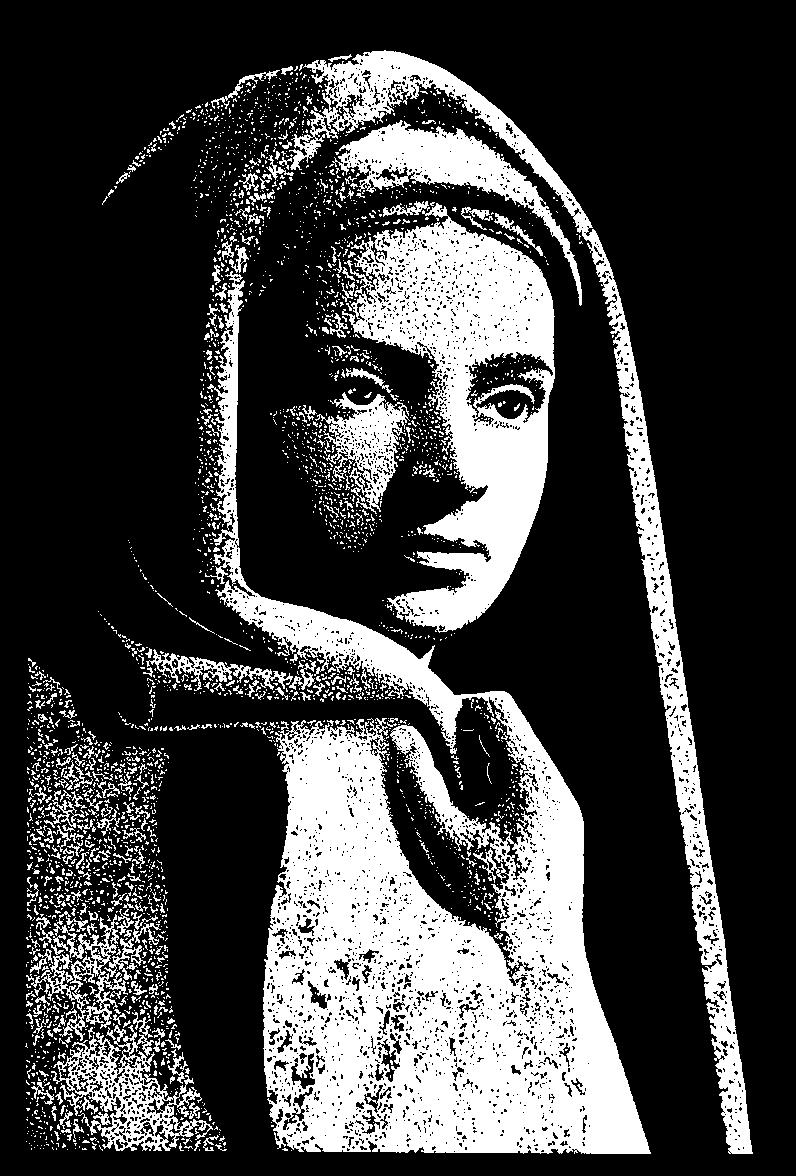
Drawing of Vilón’s statue of ‘Bernadette’ at the Fort in Lourdes, France
Thirty Years With Saint Bernadette
Paulos came to know Saint Bernadette Soubirous in a way that stood apart from the other saints he met through art and devotion.
As a kid, he heard her name at school from the nuns.
He says that part stayed with him.
He also felt that she was speaking to him in a personal way.
Paulos admits he was not a top student. He was even called stupid at times.
The nuns did not let that label stick.
They told him that smarts are not only tests, numbers, and dates. They said there were other gifts in him.
Bernadette had been brushed aside too.
People had doubted her.
For Paulos, that match mattered.
He says, “I was called stupid all my life, the way they called Saint Bernadette. I did know, deep inside, that I was not.”
In his view, Bernadette’s power did not come from being brilliant in the usual way.
It came from humility.
Her plain way of living turned into something strong in the spiritual sense.
He learned more as the years went on. He spent thirty years at the Shrine of Saint Bernadette in Albuquerque. During that time, he helped in shaping how the shrine grew.
He worked with the International Shrine at Lourdes.
Later, he helped guide a big renovation.
That change brought in new stained glass and statuary. There were etched glass doors too, plus floor medallions and new altars. A museum space was also added to honor Bernadette.
Because of this work, he was not just inside a building for the saint.
He was close to a faith that people still live today.
He also gave many tours.
He paid attention to what moved pilgrims.
He watched their expressions as they listened.
Over time, he saw which parts of Bernadette’s story landed hardest with them.
Seventeen Pilgrimages and a Life of Research
Paulos later guided seventeen trips to Lourdes and Nevers in France.
To him, it was not travel for sightseeing.
He treated it like study and prayer, with real meetings along the way.
He went to the spots tied to Bernadette.
He saw where she had lived.
He learned where she served.
He stood with the places linked to her pain and her death.
He sat with people from her religious community.
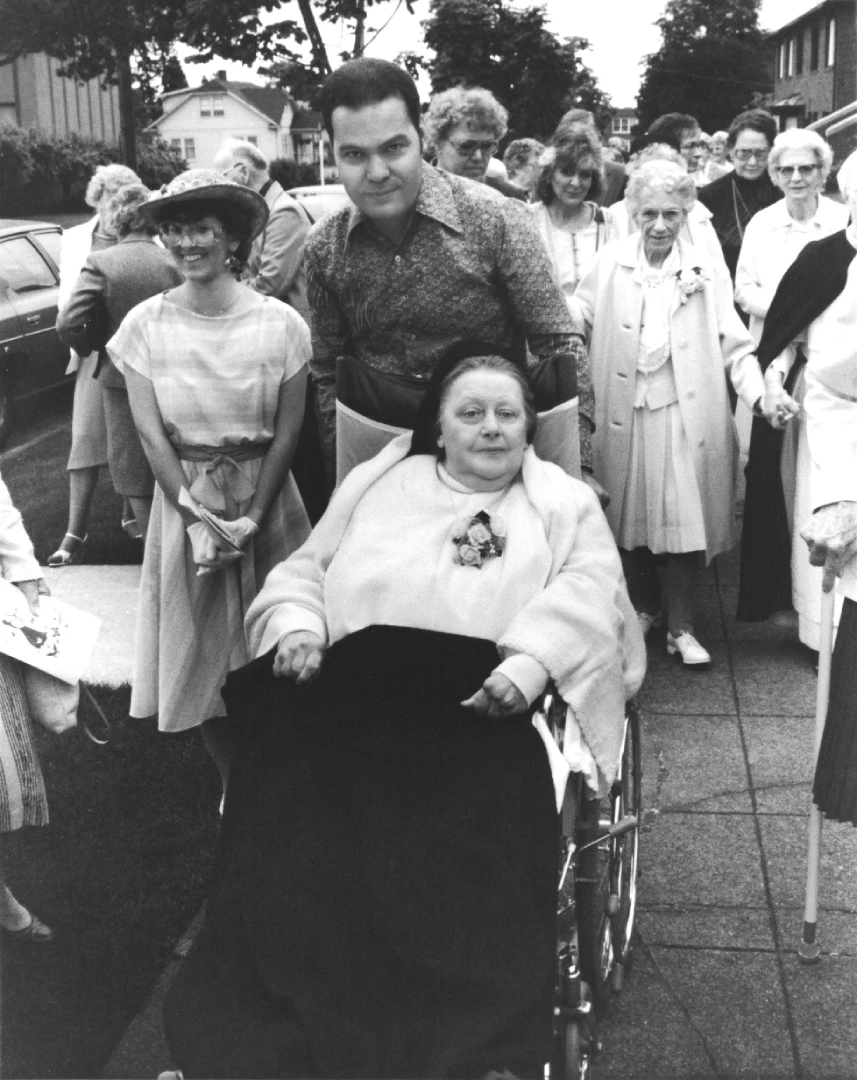
Sister Mary Jean Dorcy and Dan in Seattle at her 50th Anniversary as a Dominican nun
In Lourdes, he also spent time with her family members.
Over the years, he gathered more than one hundred English biographies of Bernadette for his own shelf.
He read them closely and compared what each book claimed.
His goal was to tell what was true apart from what was copied or wrong.
His work with the Sisters of Charity and Christian Instruction in Nevers mattered a lot.
They sometimes looked at American versions of Bernadette with extra caution.
This was often because some popular plays and dramatizations kept getting details wrong.
Paulos took their worry seriously.
With their help, he could fix parts of his own writing.
Some points might have stayed off mark without that push.
Because he keeps checking details, his books feel different.
He can be very devout.
At the same time, he stays careful about history.
The Saint as a Human Being
Paulos tries, first thing, to write Bernadette like a real person.
Not just holy.
Not just untouchable.
He makes her easier to meet.
In his stories, you can see her humor, her way of talking, her weak body, her grit, and her modest heart.
One tale he likes a lot shows this mix.
Bernadette was sick. She had opened a window.
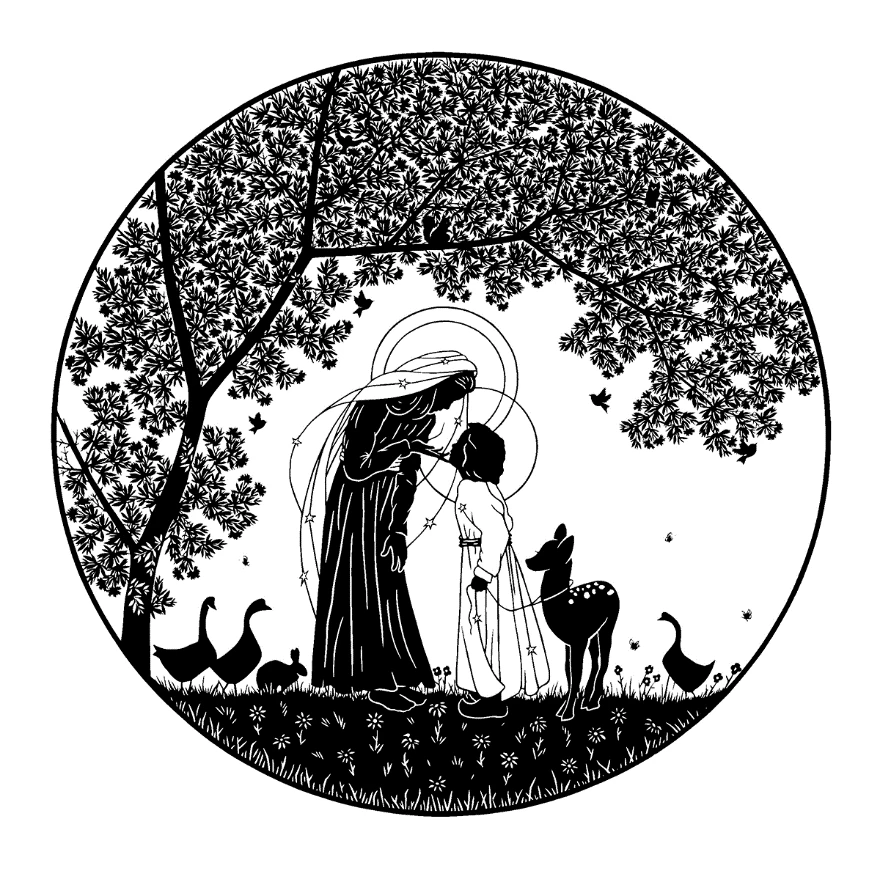
‘But Who Will Take Care Of It?’ collaborated papercutting by Dan Paulos and Walter von Gunten
A man of higher rank came in and told her off.
A younger sister rushed over and shut the window fast.
When the higher rank man was gone, Bernadette told the sister to open it again.
The sister was upset and shocked.
Bernadette replied in a plain way, the kind that fits her.
She pointed out that the man had not told her to close the window.
The younger sister had done it herself.
It feels like a tiny scene, but Paulos holds on to it.
He likes how it breaks the stiff picture people keep of sainthood.
Bernadette can be funny.
She can see the ridiculous parts of a situation.
She can stay herself.
That sense of real life sits at the center of Paulos’s writing.
He wants readers to meet Bernadette not behind old glass, but as a young woman.
She can laugh.
She can hurt.
She can take hard days.
And she can keep her faith even when others get it wrong.
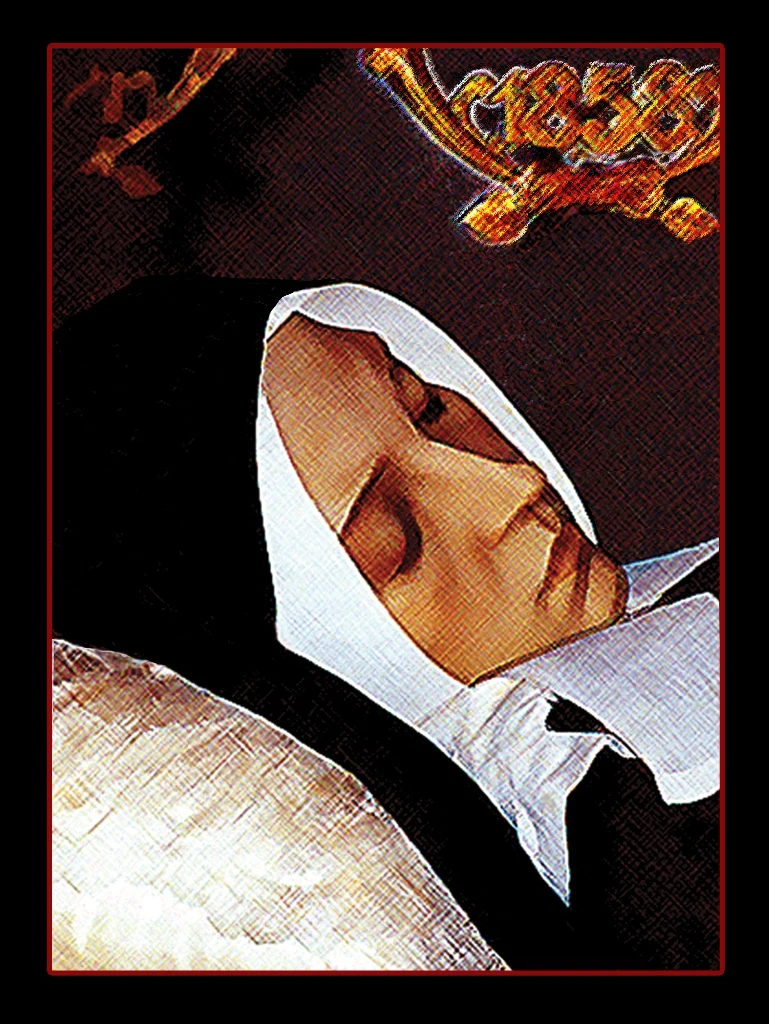
“Bernadette Resting” by Dan Paulos
Writing Bernadette in the First Person
The closest version of that method shows up in “I, Bernadette.”
Paulos says he sat in the front pew at Nevers. He was there in front of the saint’s body that would not decay. While he waited, he pulled out a pad and a pencil. Then he began to write.
The lines came out in the “I” form.
He was not aiming for that choice ahead of time.
It just felt right. It matched what the story needed.
“I believe it was Bernadette who brought me to tell her life in the first person,” he says.
He also remembers the back and forth while he worked. He laughed at times. He cried at others.
The hardest sections were the parts about her death and her canonization. To him, they did not read like distant history. They felt close. They felt holy.
Before he moved into the more painful stretches, he prayed again and again. He knew his own temper could rise. He worried it would take over.
He had real feelings about how Bernadette was ill treated.
Still, he held it back, so her humility would not get pushed aside.
In the end, that discipline became part of how he wrote.
Review: A Tetralogy Built on Simplicity
Saint Bernadette Tetralogy is a set of four older books in one cover. It brings together reflections, prayers, stories, and art.
At first, the plan was simple.
People reading the earlier volumes kept asking about getting all four at once.
Paulos said yes.
He jokes that he never really cared for the term “tetralogy.” Still, he notes that the word makes him sound like he planned everything from the start.
The main point is the shape of the set.
It is not only a life story.
You can feel history in it, but you also get devotion. There are prayer passages, plus a record of the art tied to these works. There is also personal testimony throughout.
The strongest part is how close it feels.
Paulos does not write as if he is standing far away. He writes like someone who spent years near the subject. He went to the places she lived. He spoke with the sisters who kept her tradition alive. He looked at different versions of events. He tried to turn faith into words and images that make sense.
The book is easy to enter, on purpose.
Paulos still thinks about that friend, the one with the doctorate. The friend read his manuscript and said it came out like a fourth-grade level.
Paulos took that as a kind thing to hear.
To him, plain writing does not mean low skill.
It means the message is easier to see.
He felt the same idea from the saint.
He says, “Simplicity is strength. Humility is holy. And love for God is powerful.”
The tetralogy works best when it keeps to that same rule.
It does not try to bury you in heavy theology.
It just draws you in, so you can feel near to the story.
Art as a Hug From Heaven
Paulos is retired now. Still, he may stay in his studio for ten hours most days.
Those long hours feel special to him.
He keeps music on in the background, often sacred music. In his view, making art is the highest form of praying.
“When I make my pieces,” he says, “I keep praying that it turns into something as simple as a warm embrace from above.”
That line tells more about his work than any formal talk could.
He does not talk like he expects attention or fame.
He also does not count on people remembering his art or his writing.
For him, the key point is different. He wants the work to reach someone who is worn out and needs comfort.
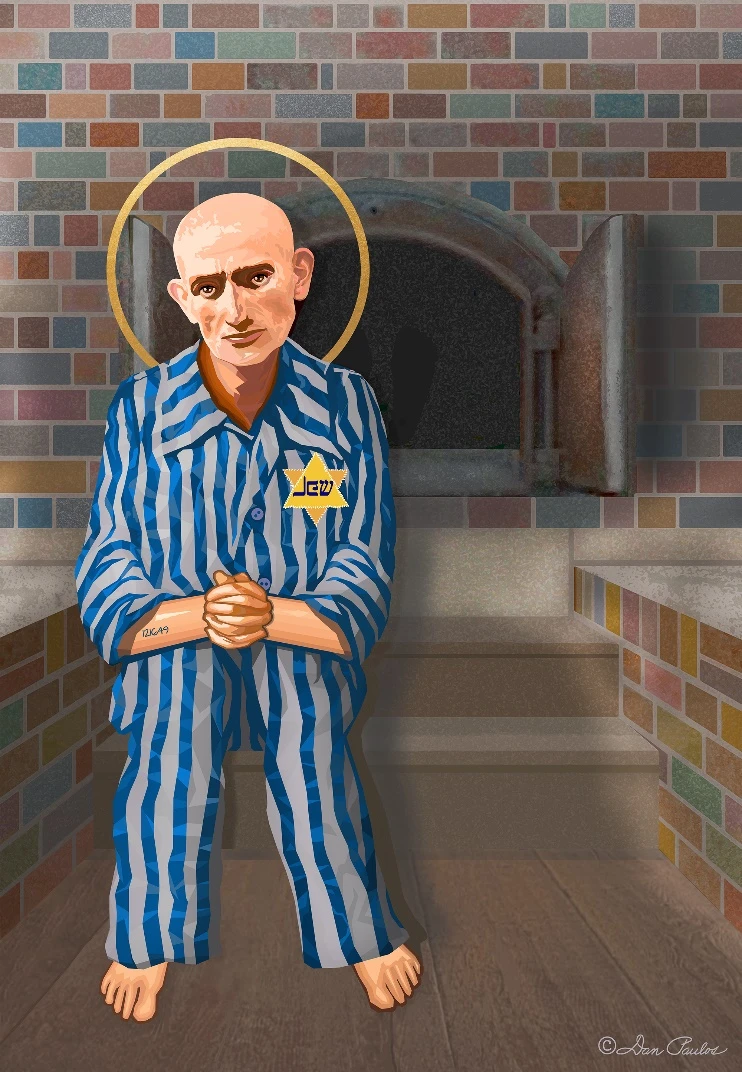
‘Holy Custodian of Ashes’ from the Paulos Holocaust Series
His papercutting, his books, his shrine pieces, and his collection of Bernadette all come from the same drive.
He takes something that feels spiritual and gives it a form you can see.
He tries to make it easier to understand.
He shapes it so it feels soft enough to be received.
Why Bernadette Still Matters
Paulos thinks Bernadette’s account still matters. He says the troubles she met sound familiar to people today.
Doubt still shows up.
People still get lost in misunderstanding.
Prejudice still stains how others look at her.
Illness still breaks routines.
Loneliness still follows.
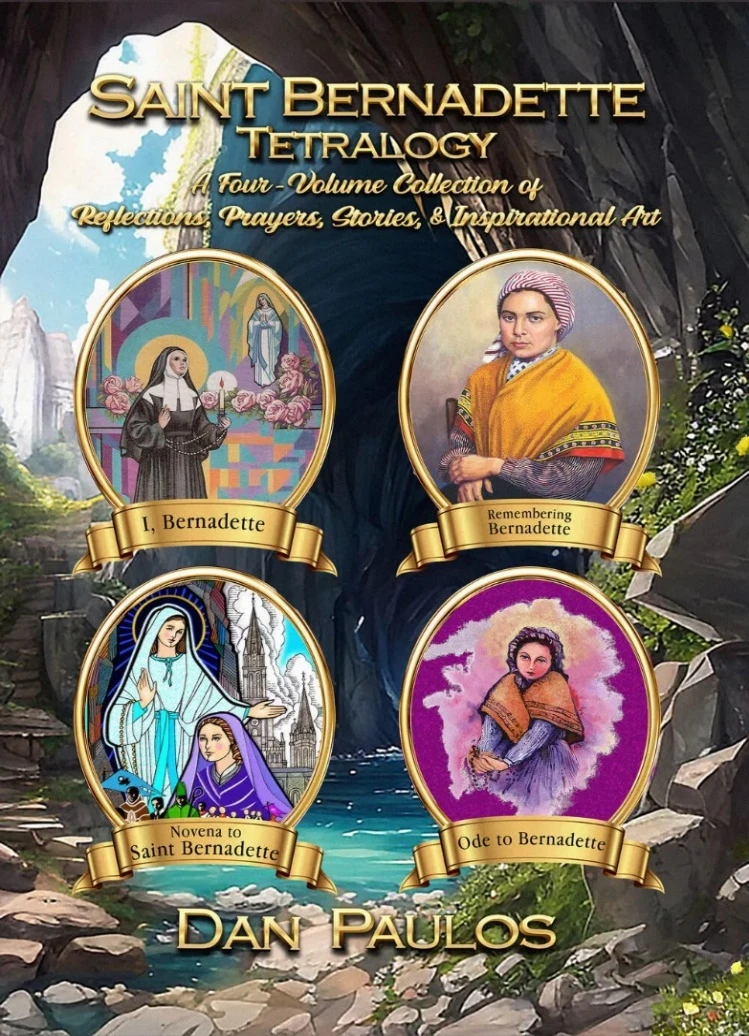
Book Cover
And still, many people would not take her at her word.
Even people who knew her well had a hard time with her account.
Still, Bernadette kept going.
She did not make it her job to demand that others believe.
Paulos points to a line from her that he really likes.
She said she was asked to tell what happened.
She said the point was to share her experience.
It was not to push her listeners into faith.
That idea shapes how Paulos works.
He is not trying to build belief by force.
He is trying to present the story with care.
He wants the reader to meet it in their own way.
His goal is clear after the Saint Bernadette Tetralogy.
He hopes people stop treating her like only a figure from the past.
He wants them to see her like someone close.
Someone they can talk to.
Someone they can bring their fears to.
Someone they can ask for help.
Someone with room for private grief.
So, for Paulos, this is less about dry scholarship.
It feels more like company for the reader.
He has lived near holy places for years.
He has been around nuns, shrines, and pilgrims.
He has met sacred artists and heard stories about faith.
Then he takes what he learned.
He shares it again.
Not as big stone reminders.
More like open hands.
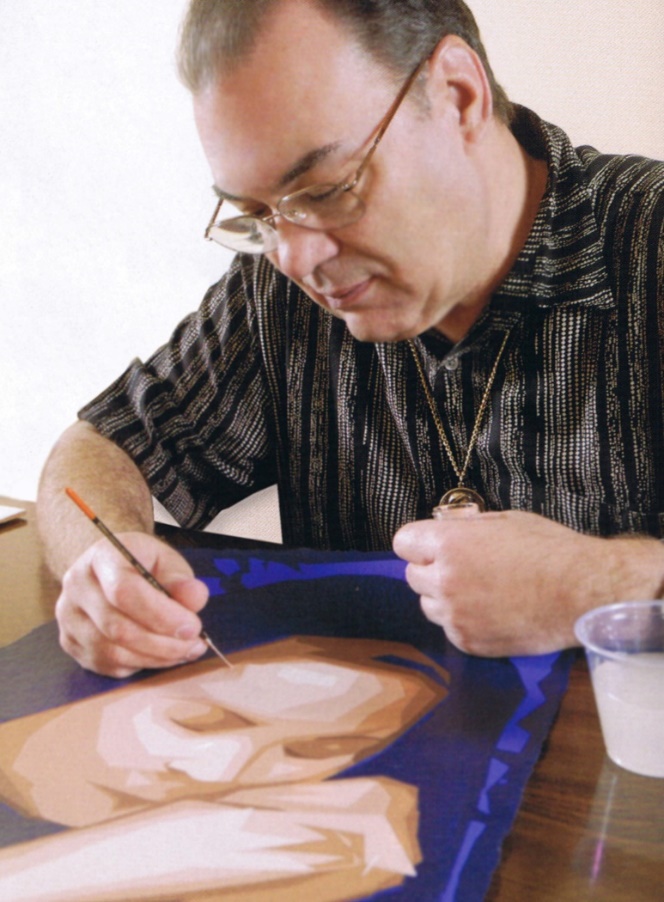
Paulos working on a painting of actress Rosemary Harris – ‘Mother of Sorrows’
His own teacher once told him that plain work is the best kind.
After years of making art, traveling, and writing, he still follows that advice.
He still acts like it is true.
Dan Paulos and Saint Bernadette connect in a simple way.
Neither story needs grand gestures.
Both lean on small moments.
A boy writing to a nun.
He admired her work and wanted to say so.
A child with feet that could not reach the organ pedals.
A young girl from Lourdes who did not get the credit she deserved.
A sheet of paper cut with care to form an image.
A prayer said without noise.
A retelling done in a way that another person can hold.
For Paulos, none of these are really small.
This is where faith starts.
Discover Dan Paulos and the Saint Bernadette Tetralogy
Book:
https://a.co/d/0bhcMLC5
Saint Bernadette Institute:
https://www.stbernadetteinstitute.com/books
Booktopia:
https://www.booktopia.com.au/saint-bernadette-tetralogy-dan-paulos/book/9798903011520.html
Dan Paulos Blog:
https://danpaulos.com/blog/